12 hours ago
India's tokenized bond pilot starts with institutions, retail access planned next
India's tokenized bond pilot starts with institutions, with retail access planned next

CryptoSlate
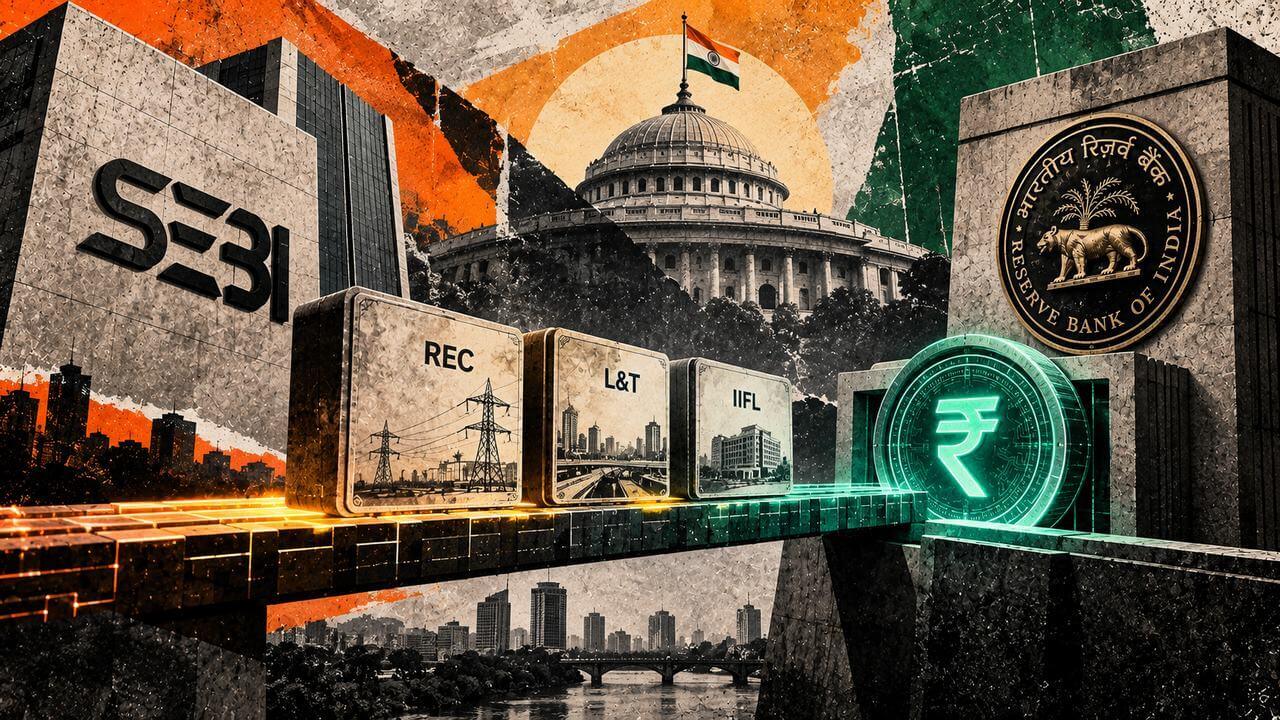
The Securities and Exchange Board of India launched a pilot for tokenized corporate bonds and linked cash settlement. The pilot moved ₹1,025 crore through its first three issuances. The pilot preserves the bonds' existing legal and economic terms. SEBI announced Demat 2.0 on Sept. 10. REC Limited, L&T Limited and IIFL completed tokenized bond issues on Sept. 7 and Sept. 9. REC's issuance was ₹500 crore. L&T's issuance was ₹500 crore. IIFL's issuance was ₹25 crore. Further Stage I issuance is ongoing. The bond is issued as a native digital token on a private permissioned distributed ledger. Payment uses the Reserve Bank of India's wholesale digital rupee. The digital rupee is designed for financial institutions. SEBI's technical FAQ says the bond and cash legs use atomic delivery-versus-payment. Both settle together or neither settles. This removes the interval between a buyer's payment and receipt of the bond. Issuer credit risk remains unchanged. The token is the bond itself rather than a digital claim on a conventionally held security. The token keeps the same ISIN identifier, coupon, maturity, covenants, rating and security as a conventional dematerialized bond. Issuer obligations remain unchanged. Investor rights remain unchanged. Regulatory treatment remains unchanged. India's depositories own and control the private network. The depositories remain the statutory records of beneficial ownership. Market infrastructure institutions developed and operate the system. Depositories and stock exchanges initially run the network's validating computers. Depositories hold and manage investors' private keys. Investors can access the tokenized ledger without managing the bond tokens' private keys. Investors also remain within the existing intermediated custody model. Stage I covers institutional issuance and ledger-based asset servicing. SEBI reserves tokenized secondary-market trading and retail participation for Stage II. Before Stage II, an investor may exit through a peer-to-peer or demat-to-demat transfer handled by depositories. Payment for that transfer may occur outside the atomic setup through the digital rupee or conventional banking channels. Stage II will test whether the architecture can support routine liquidity and a broader investor base after issuance.
This content is an AI-generated summary/analysis for informational purposes only and does not constitute investment advice.