November 06, 16:59
Employers add 165,000 jobs in October, more than double economists' expectations
"Strong hire, low fire" labor market surprises economists

Axios
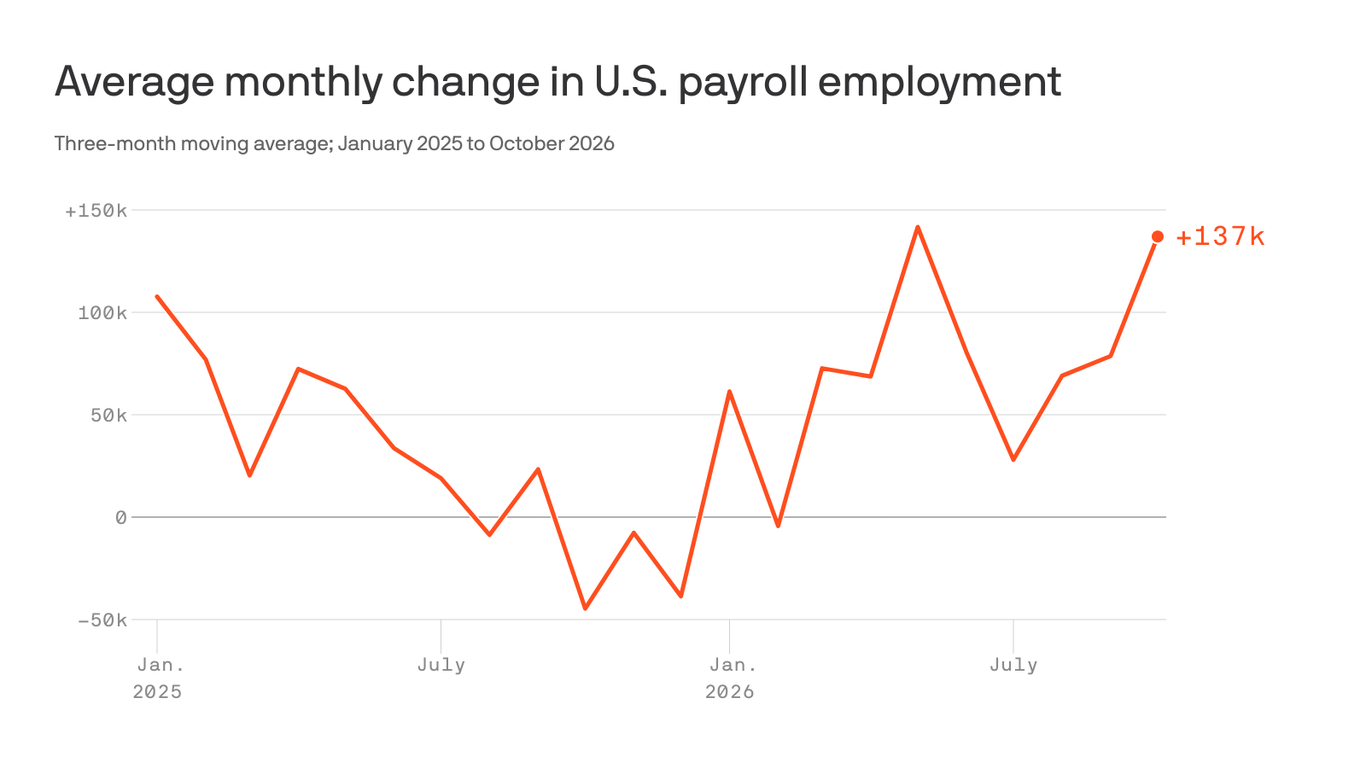
Employers added 165,000 jobs last month, more than twice the 65,000 economists had forecast. Revisions increased the combined payroll gains for August and September by 84,000 jobs, indicating stronger hiring before the fall than previously understood. Monthly job gains averaged 137,000 over the past three months. The three-month average for May through July was just 28,000.
Employers continued hiring at a strong pace despite potential deterrents, including geopolitical uncertainty and the spread of AI. Layoffs remained low throughout the economy. Glenmede's Jason Pride wrote that much of this year's payroll data suggested a "low hire, low fire" labor market, but October resembled "strong hire, low fire".
Industries that had struggled to expand employment in recent years recorded some of the largest gains. Professional and business services, which includes office and administrative work, led employment growth with 70,000 additional positions. The category's monthly gains averaged 15,000 over the past year. Manufacturing employment increased by 19,000 last month, including gains in computer and electronic products, machinery and primary metals. Health care added 42,000 workers last month, continuing the sector's substantial contribution to employment growth in recent years.
The unemployment rate fell to 4.1% from September's 4.2%, although rounding made the actual decline of 0.03 percentage point appear larger. The unemployment rate has stayed between 4.1% and 4.3% since March despite fluctuations in hiring this year. The labor force expanded by 421,000 last month without increasing unemployment. The number of employed Americans increased by a larger 463,000 last month. However, the number working part-time because full-time jobs were unavailable or working hours had been reduced rose by 339,000 to 4.8 million last month.
Average hourly earnings increased 0.4%, the largest monthly rise since the beginning of 2026. However, annual wage growth slowed to 3.1% from 3.9% a year earlier. Inflation has reduced the benefit of wage increases in recent months. Tuesday's October Consumer Price Index release will indicate whether purchasing power increased last month.
Democrats' broad midterm election victories highlighted Americans' dissatisfaction with high living costs. However, the labor market provides some grounds for optimism despite that frustration.
This content is an AI-generated summary/analysis for informational purposes only and does not constitute investment advice.