an hour ago
Dow futures rise 684 points as stocks rebound from correction
Dow futures jump nearly 700 points and Nasdaq soars 3% as stocks rebound from correction with Wall Street still upbeat on 2027

Fortune
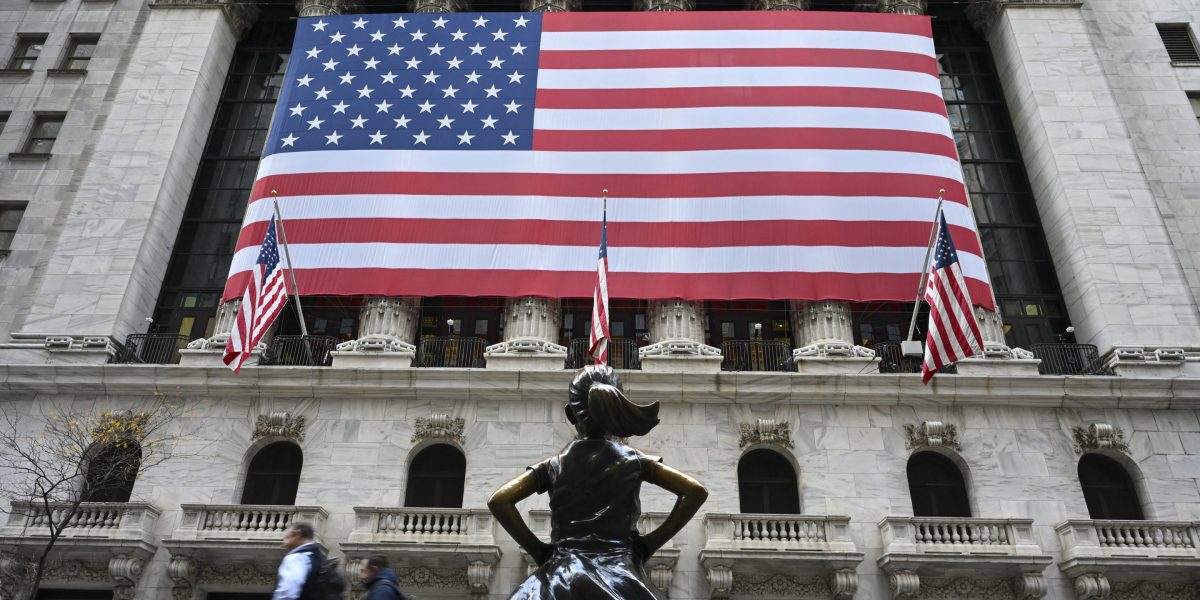
Dow Jones Industrial Average futures gained 684 points, or 1.41%, ahead of a shortened trading week. S&P 500 futures advanced 2.1%. Nasdaq futures climbed 2.89%, roughly 3%. The rebound followed the market's worst loss in more than six years.
The Dow and Nasdaq recorded their largest weekly declines since the beginning of the COVID-19 pandemic. The S&P 500 suffered its sharpest weekly fall since April 2025, when President Donald Trump announced the tariffs Trump called "Liberation Day" tariffs. The Dow and S&P 500 entered correction territory alongside the Nasdaq. Technology stocks led the decline amid fears on Wall Street that the AI boom would collapse. The downturn started after Democrats skeptical of data centers won midterm election victories.
A spy scandal at Nvidia resulted in Jensen Huang's removal as CEO and intensified the selloff. The scandal also raised concerns that Huang's "circular" financing arrangements could collapse, depriving neocloud companies in Nvidia's ecosystem of funding for additional data centers or AI chips. Disclosures that China had backdoor access to advanced U.S. chips used for AI development prompted federal efforts to eliminate gaps in export restrictions. Trump also pledged to prevent U.S. companies from constructing data centers outside the United States.
Moody's Analytics Chief Economist Mark Zandi warned that the stock selloff could hurt economic growth through the wealth effect on consumer spending. Zandi estimated that spending changes by about 2 cents for each $1 change in net worth over approximately a year. If stock prices remain at current levels, the wealth effect will reduce real GDP growth by almost 0.3 percentage points a year from now. The wealth effect added 0.7 percentage points to real GDP growth this quarter. Zandi said previous rapid recoveries in AI shares had trained investors to buy after prices declined. Zandi expected substantial price fluctuations in the coming days but suggested that the easiest gains from AI investments increasingly appeared to be over. Zandi argued that, if those easy gains are over, the economy cannot rely on AI as the only source of growth.
Year-end trading often brings improved sentiment and higher stock prices. The customary "Santa Claus rally" remains weeks away, but the coming shortened week could offer an earlier recovery. Markets will shut on Thursday for Thanksgiving. Friday's trading session will last half a day. Low trading volumes could magnify stock rebounds.
However, Wall Street forecasters remain optimistic about 2027 despite the market corrections. Morgan Stanley and Goldman Sachs each project an S&P 500 level of 8,700 at the end of next year. UBS Global Wealth Management and Wells Fargo each forecast 8,200. Steve Chiavarone, chief investment officer for equities at Federated Hermes, has a year-end forecast of 10,000, representing a 45% rise from current levels.
Chiavarone dismissed concerns about this month's midterm elections, in which Democrats won control of Congress and several state capitals. Wall Street fears those Democratic victories will slow investment in AI infrastructure. However, Chiavarone argued that the risks to construction were exaggerated and that a small reduction would be beneficial. Chiavarone said a modest slowdown in data center construction could allow cash flows to catch up, reduce inflationary pressures and make the investment boom more sustainable.
This content is an AI-generated summary/analysis for informational purposes only and does not constitute investment advice.