November 17, 03:30
Uniswap proposes bridge repair and auction for roughly $300,000 in stranded fees
Uniswap freezes $300,000 in stranded fees, halting automatic token burns

CryptoSlate
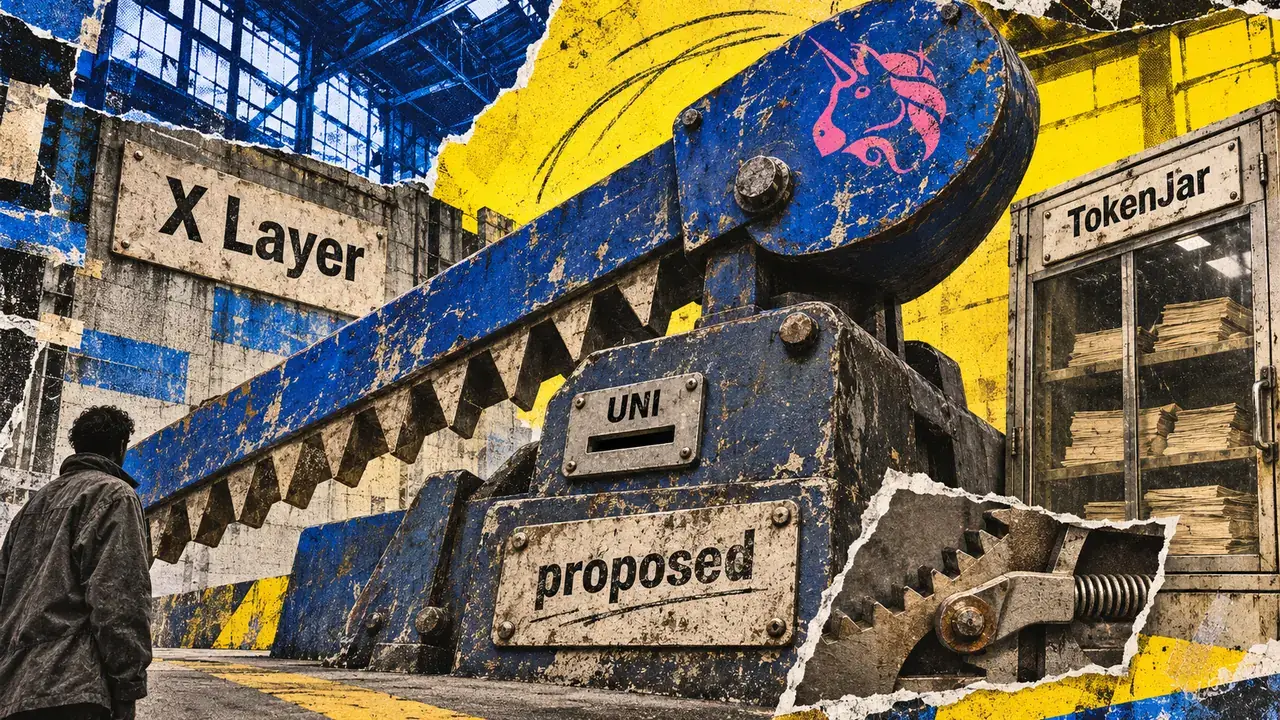
Uniswap's proposed repair would change the bridge route and claim payment used to release fees stranded on X Layer, with the backlog estimated at roughly $300,000. Uniswap Labs disclosed on Nov. 6 that protocol fees were accumulating on X Layer without being released, preventing the corresponding UNI burns. Implementation reviews dated Nov. 13-14 describe a larger starting payment intended to limit the first trader's potential gain from clearing the backlog.
Uniswap's fee mechanism lets outside traders, called searchers, provide UNI to obtain selected fee assets from a collection contract called a TokenJar. The UNI payment funds a burn, while the searcher retains any recovered value exceeding the payment and execution costs. A completed burn requires both a searcher to execute the exchange and a bridge to settle the transaction. A fee release therefore does not require Uniswap to purchase UNI in the open market at that time.
X Layer routes governance messages through the OP Stack bridge but transfers tokens through Agglayer. Uniswap Labs said the installed relayer used the standard OP Stack approach to token bridging, but X Layer's implementation rejects ERC-20 transfers, including UNI. Proposal 95 records execution on March 8, including actions activating X Layer fees. The replacement would complete burns through X Layer's token-transfer route.
The edited description of protocol-fees implementation PR 167, opened Nov. 2, estimates that roughly $300,000 in fees could enter the TokenJar. The description warns that retaining the existing 2,000 UNI payment could let the first searcher claim the accumulated assets for that fixed amount. Uniswap requires explicit calls to collect v3 and v4 fees, so the TokenJar's wallet balance does not represent all fees accumulated in pools.
PR 167 specifies a starting threshold of 80,000 UNI, a minimum of 2,000 UNI and a two-day half-life. The description estimates that the threshold would reach the minimum after about 10.8 days. The required payment would decline until a searcher judged that recoverable assets justified the payment and execution costs. Competition could consequently channel more backlog value into UNI payments rather than searcher profits. However, the Nov. 6 forum plan gives a duration of roughly six days after execution, rather than the reviewed implementation's approximately 10.8 days.
Governance would initiate the decline after the TokenJar was directed to the replacement releaser. Anyone could update the threshold, and searchers could combine an update with a fee release. The setter would hold temporary ownership of the releaser until the first update at the minimum threshold returned ownership and threshold-setting authority to governance. The reviewed design eliminates a separate reclaim function, so the passage of time alone would not return control.
The combined implementation in PR 169 was still a draft on Nov. 15, with deployment of the setter and replacement releaser listed as blockers. The separate releaser and setter PRs were still open. The official deployment registry continued to identify the original X Layer releaser.
Strata Terminal reported $7.8 million in UNI burns during the preceding 30 days as of Nov. 15. Strata Terminal also reported cumulative recurring burns of 14.1 million UNI, excluding the one-time treasury burn of 100 million UNI. The earlier $300,000 backlog estimate reflects a different observation date and valuation method from the realized burn figures. A direct conversion ratio would therefore mix an estimated fee stock with completed burn flows. The repair's economic test is the amount of UNI that the eventual release payment transfers to Ethereum's burn address.
This content is an AI-generated summary/analysis for informational purposes only and does not constitute investment advice.