8 hours ago
SEC removes filings linked to alleged $130 million crypto investment fraud
Crypto scammers used SEC's website to lure investors into alleged $130 million fraud

CryptoSlate
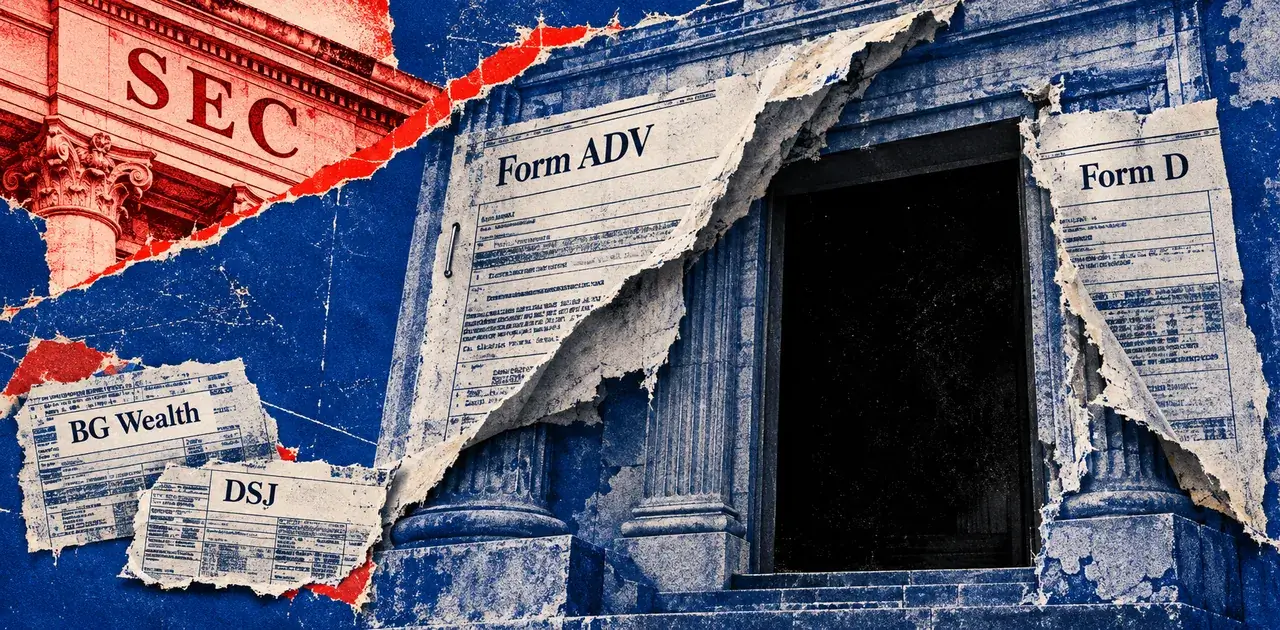
The US Securities and Exchange Commission (SEC) has removed regulatory filings allegedly used to give a $130 million crypto investment fraud the appearance of legitimacy. The SEC said in an October 29 announcement that BG Wealth Sharing and DSJ Exchange submitted false disclosures and presented the public records as evidence of government authorization. The alleged scheme collected more than $130 million from tens of thousands of investors in the United States and abroad. Alleged investor losses exceeded $100 million, and recovery remains unresolved.
The SEC said the companies operated from at least October 2025 through June 2026. According to the SEC, the companies promoted a cryptocurrency investment program promising monthly returns of at least 60%. The SEC said the program also promised investors could double their money within 40 days without taking any risk. BG Wealth described itself as the largest hedge fund worldwide and claimed to be an investment adviser licensed by the SEC. DSJ Exchange claimed that a secure cryptocurrency trading platform conducted profitable trades. However, investigators alleged that the trading was fictitious and that the companies diverted most deposits instead of investing the money as promised.
The alleged scheme exploited the credibility of the SEC's public disclosure systems, which investors can use to research financial businesses and securities offerings. The SEC's civil complaint alleges that BG Wealth filed Form ADV to claim status as an exempt reporting adviser. The complaint alleges that DSJ Exchange submitted Form D for a purported securities offering worth $100 million. The SEC's Investment Adviser Public Disclosure system and EDGAR database made the filings publicly available, enabling promoters to cite government-hosted records as supposed evidence of legitimacy. The companies allegedly supported those claims with fabricated registration certificates displaying the SEC seal and identifiers linked to the filings. Neither company held SEC registration or a license, and the forms did not confer regulatory approval.
BG Wealth claimed that proprietary trading technology produced signals with an accuracy rate of 99.6%. DSJ Exchange showed fictitious transactions, profits and increases in account balances. Investigators found that the defendants collected more than $130 million from over 223,000 blockchain addresses between March and early June 2026. The SEC alleges that Ponzi-like payments returned no more than $25 million to addresses likely controlled by investors. The SEC alleges that most of the remaining money was misappropriated.
The operation recruited participants through social media promotion, encrypted messaging services, weekly video conferences and recruitment incentives. The companies allegedly charged fees reaching 20% when investors sought withdrawals. The companies allegedly delayed withdrawals and ultimately prevented investors from accessing funds. The defendants later requested additional payments for taxes and urged investors to transfer assets to HQI Exchange, another platform. Withdrawal access remained unavailable.
The SEC removed BG Wealth's Form ADV and DSJ Exchange's Form D from the regulator's public websites. The SEC filed a civil action against both companies in the Northern District of California. The lawsuit seeks permanent injunctions, financial penalties and repayment of allegedly unlawful gains with interest. The SEC also requested a court order barring BG Wealth from filing Form ADV as an exempt reporting adviser in the future.
This content is an AI-generated summary/analysis for informational purposes only and does not constitute investment advice.