November 05, 22:16
Paraguay's Peña announces resignation after Ueno collapse blocks millions of accounts
Bitcoin Fixes This? Paraguay President Resigns After Bank Lockout Hits 60% of Country

Decrypt
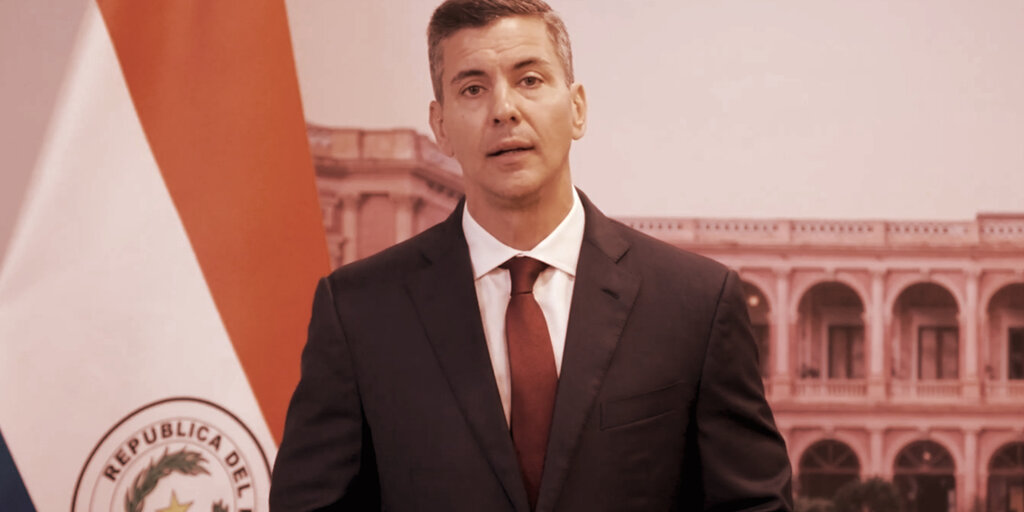
Paraguay's President Santiago Peña announced his resignation Thursday after Ueno Bank collapsed, preventing roughly three million customers from accessing their accounts. AP reported that Paraguay's lower house approved impeachment by 78-0 minutes after the announcement. AP reported that the charges went to the Senate while Vice President Pedro Alliana prepared to assume office.
Paraguay's central bank put Ueno into resolution after regulators determined that the bank's solvency ratio was below half the legally required minimum. The resolution process was announced on November 3 following adjustments to Ueno's financial statements. Ueno's app, payment cards and transfer services became unavailable.
Ueno claimed a customer base of around 2.9 million, representing more than 60% of Paraguay's adult population. AP reported that Ueno held approximately $800 million in public-sector deposits, including money from pension and health funds. The shutdown also prevented ordinary depositors from accessing savings and wages.
Peña previously owned an interest in a company connected to Ueno's owners, prompting allegations of conflicts of interest. Reuters reported that Peña denied wrongdoing and said Peña sold the interest in March 2025. Peña said in his resignation address that Peña wanted depositors' money returned and the Deposit Guarantee Fund to fulfill the fund's purpose. The fund serves a role comparable to the United States' Federal Deposit Insurance Corporation.
Protester Luis Pineda accused Peña and the Colorado Party of stealing depositors' savings outside Congress. Pineda told AP, "We are fed up with 70 years of plunder."
The central bank said Ueno's failure was an isolated incident rather than a sign of a wider banking collapse. The central bank announced coverage of up to 228.3 million guaranies per depositor, equivalent to roughly $36,000. The central bank said Thursday that initial guarantee payments would cover eligible depositors holding up to 10 million guaranies. Those depositors must have no debts to Ueno and must hold an account with another financial institution.
The account freeze has renewed the argument that financial intermediaries determine whether customers can access money entrusted to those institutions. Bitcoin supporters have long cited the newspaper headline embedded in Bitcoin's first block, mined in January 2009, about a second bailout for Britain's banks.
Bitcoin holders who control wallet private keys can approve transfers without obtaining permission from a bank or another third party. However, an exchange holding customers' Bitcoin can suspend withdrawals. Self-custody carries different risks, including theft and price volatility. Holders who forget or lose private keys cannot recover the funds, and neither assistance providers nor law enforcement can restore access.
This content is an AI-generated summary/analysis for informational purposes only and does not constitute investment advice.