October 30, 21:40
Uniswap opens TJAR to other apps, with arbitrage gains limited to fast searchers
Uniswap launches TJAR fee tool, but only fast searchers capture the hidden arbitrage profit

CryptoSlate
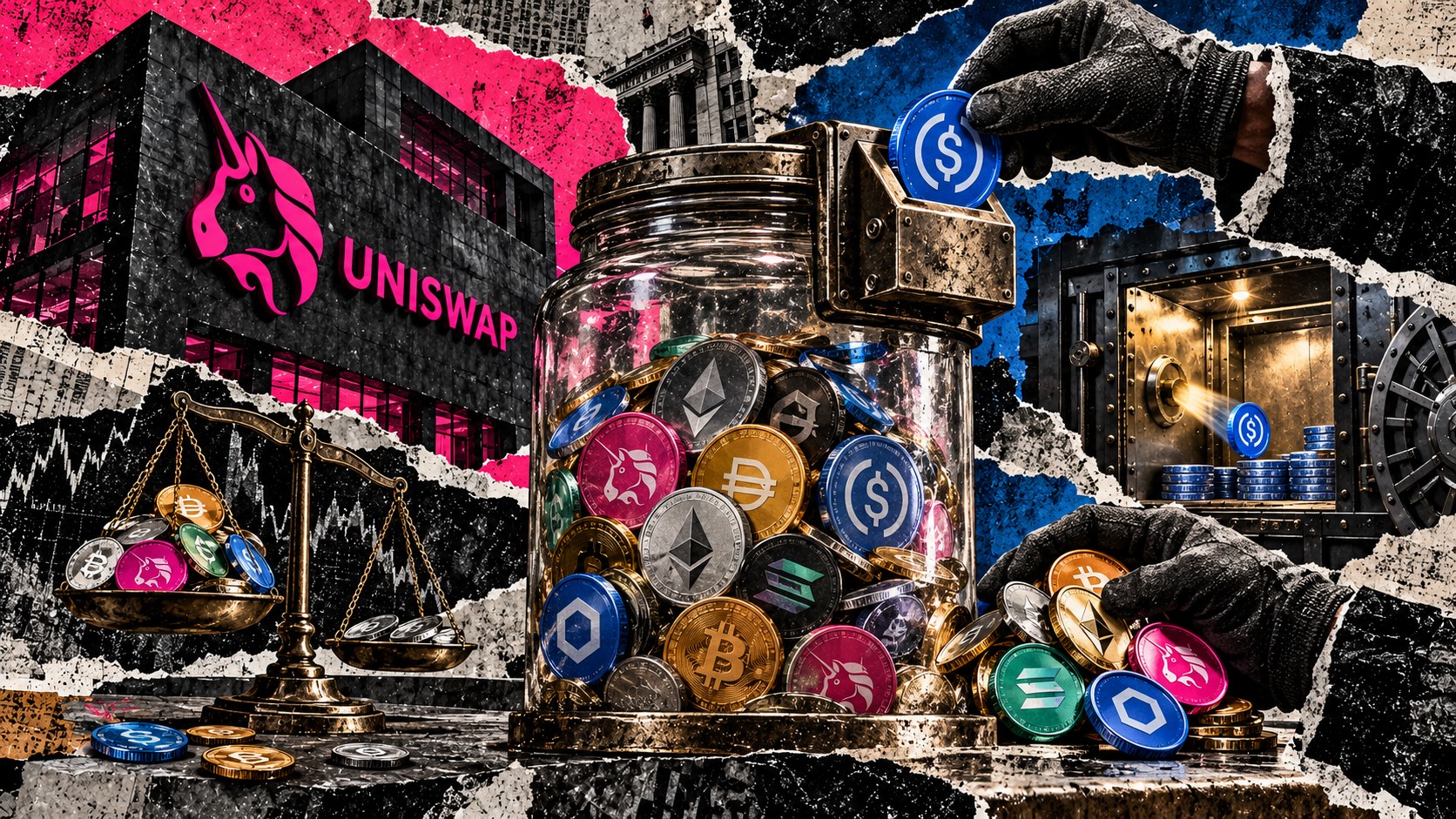
Uniswap opened its Token Jar (TJAR) fee converter to other apps on Oct. 29. Uniswap explained on Oct. 30 that outside traders can acquire accumulated fee tokens by making a fixed payment. Only fast searchers capture the arbitrage profit available through the mechanism. Uniswap said Robinhood already uses TJAR for fees generated through the Uniswap API across supported chains, receiving USDC and USDG.
Searchers provide those stablecoins in exchange for fee assets stored in an on-chain Token Jar. A Token Jar stores deposited assets, and a Releaser contract defines the required payment token, payment amount and destination. The app operator sets those terms. Searchers decide whether the available assets justify the payment.
The developer documentation says searchers must pay the complete release amount even if searchers choose only some assets. The documentation says searchers receive the full balance of every selected asset. Unselected assets stay in the jar, and the payment reaches the recipient designated by the operator. The jar assigns no value to the stored assets. The payment remains fixed despite changes in balances and market prices because no price oracle automatically updates the payment.
Searchers have a reason to execute a release when recoverable asset value exceeds the required payment plus execution costs. Competition among searchers can reduce that surplus, but the mechanism offers no assurance of profit. Robinhood receives stablecoins, whereas Uniswap's protocol-fee deployment sends UNI to a burn address. Other TJAR operators can select their own destination. The documentation says TJAR's optional protocol fee is currently unset. The Uniswap DAO controls that setting.
Uniswap's Oct. 30 pricing explanation says lower release thresholds generally increase conversion frequency and reduce exposure to token-price changes. However, a large fee deposit can abruptly increase asset value far beyond the unchanged payment. Uniswap illustrates the risk with a hypothetical jar containing $950 in assets against a release payment of 1,000 USDC. A $500 fee deposit raises the asset value to $1,450 while the payment stays unchanged. The resulting surplus can benefit the searcher at the operator's expense.
A higher release threshold reduces the importance of each deposit relative to the payment. However, a higher threshold generally delays asset conversion. Operators must balance receipt frequency against token-price exposure and the surplus that searchers can capture.
This content is an AI-generated summary/analysis for informational purposes only and does not constitute investment advice.