September 05, 10:00
Robinhood rejects AMC CEO's demand to halt token with no shareholder rights
Robinhood rejects AMC CEO's demand to halt AMC tokenized 'meme stock' which offers no shareholder rights

CryptoSlate
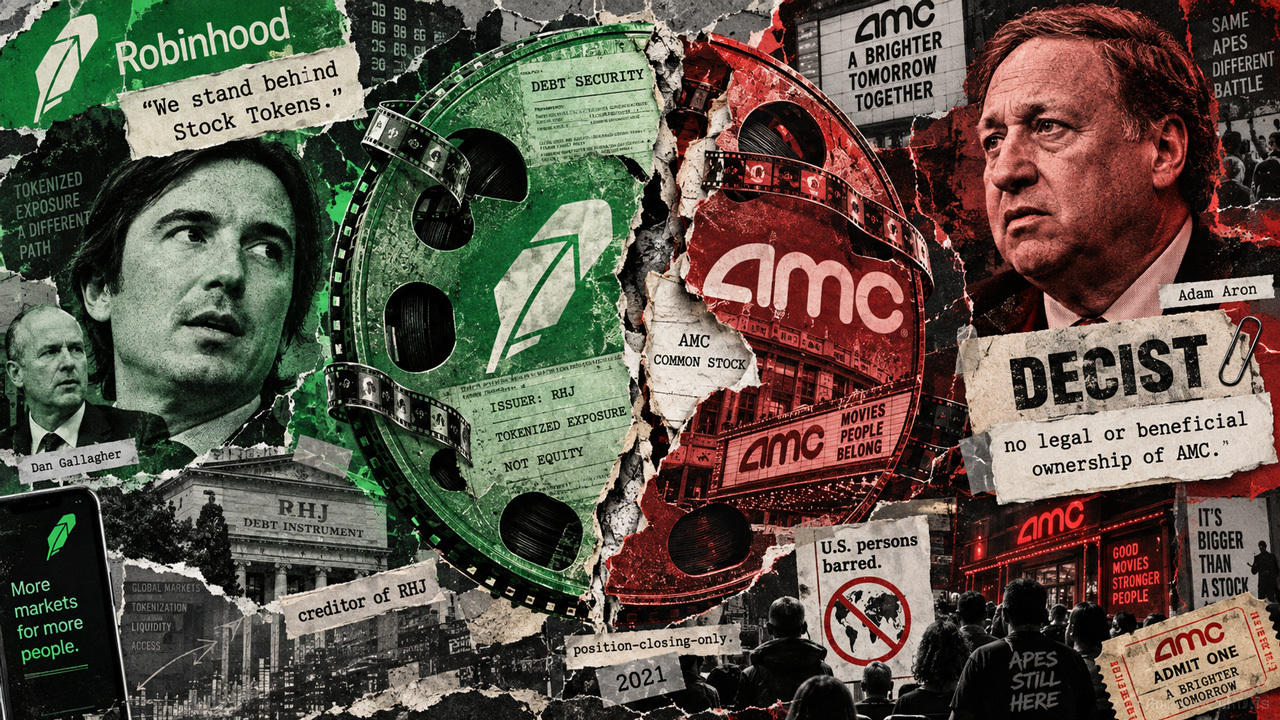
Robinhood rejected AMC CEO Adam Aron's demand to stop trading an AMC-linked Stock Token. Robinhood legal officer Dan Gallagher said the company would not withdraw the product. Gallagher told AMC to send its lawyers. Tenev said Robinhood stands behind Stock Tokens. Robinhood's documents describe Stock Tokens as tokenized debt securities issued by Robinhood Assets (Jersey) Limited, or RHJ. Holders receive economic exposure to AMC shares without a legal or beneficial interest in AMC. The AMC-specific terms identify RHJ as the issuer and AMC common stock as the reference asset. The token holders are creditors of RHJ under the debt product. They have no AMC voting, meeting, pre-emption, or direct dividend rights. Dividends and stock splits are reflected through product mechanics that include an onchain multiplier. The prospectus says the Stock Tokens remain unregistered under U.S. securities laws. It says the tokens cannot be offered, sold, or delivered in the United States or to U.S. persons. The product is issued through a Jersey entity for eligible customers outside that distribution boundary. Robinhood's asset registry listed the AMC-linked instrument as active when accessed Sept. 4. Aron initially said AMC had no connection to the token. He said AMC's outside securities counsel would examine it. Aron argued that the product could blur the distinction between economic exposure and share ownership. He argued that the product could separate trading activity from AMC's capital-raising process. He also argued that token holders would not receive the rights attached to AMC shares. Aron said AMC would take the matter to the Securities and Exchange Commission. The available evidence establishes no regulator decision on the instrument. Robinhood placed AMC and other securities into position-closing-only status on Jan. 28, 2021, during the meme-stock market frenzy. The SEC later examined that episode and the market-structure pressures surrounding broker restrictions.
This content is an AI-generated summary/analysis for informational purposes only and does not constitute investment advice.