September 30, 22:40
Petrobras tests Cardano to prevent duplicate aviation fuel claims
Brazil's largest energy giant tests Cardano to fix carbon double-counting

CryptoSlate
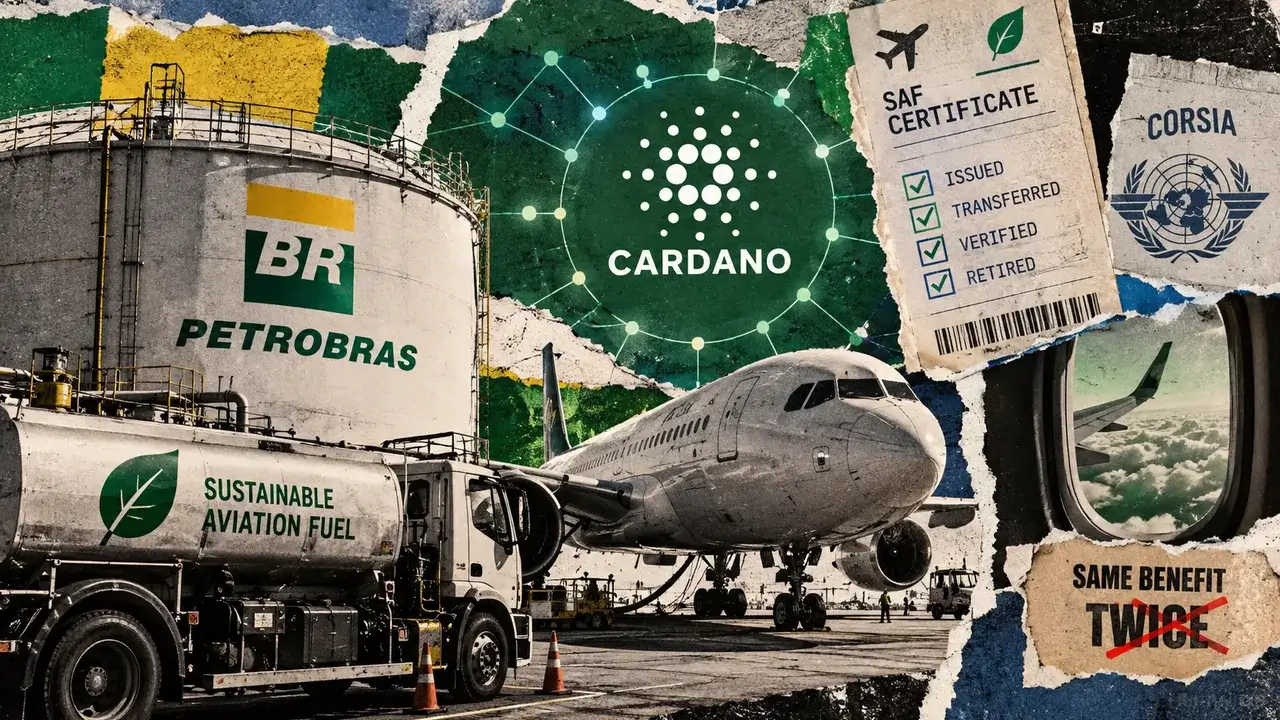
Petrobras, Brazil's state-controlled energy company, is testing Cardano to track sustainable aviation fuel (SAF) benefits and prevent duplicate environmental claims. The Cardano Foundation said on Sept. 30 that its ongoing research and development collaboration with Petrobras had produced applications for SAF and Petrobras' Diesel R renewable fuel brand. The SAF platform uses a Book-and-Claim model for cases in which the buyer of a fuel's environmental benefit differs from the buyer or user of the fuel. The model lets an airline, company or passenger receive that benefit even when the SAF is produced or used elsewhere. Petrobras developed the platform with PUC-Rio University's Ledger Labs and the Cardano Foundation. According to the Foundation's case study, the platform represents SAF environmental attributes as standardized CS-SAF tokens on Cardano. Users can create, transfer, check and retire the tokens. Retiring a token prevents its environmental attribute from being claimed again, while the digital record traces the allocation to the original fuel certificate. The Foundation says travelers can enter departure and destination airports, calculate a CS-SAF allocation and receive a certificate showing their route, distance and allocation. The traveler's claim remains linked to the original SAF certificate. The tokens carry metadata aligned with the Carbon Offsetting and Reduction Scheme for International Aviation (CORSIA). In guidance published June 16, the Roundtable on Sustainable Biomaterials said Book-and-Claim changes neither the physical fuel a buyer uses nor its associated emissions. The Roundtable said airlines should disclose supported reductions separately from operational emissions. Different value-chain participants can make distinct claims if their disclosures do not misrepresent the overall reduction. The Diesel R project, developed with PUC-Rio, proposes checkpoints across fuel production, transportation and use. The proposed continuous fuel-lifecycle record could support Scope 3 reporting of indirect emissions across a company's wider value chain. The Foundation describes the Diesel R architecture as a proposed model within the research and development work. Commercial use remains unquantified because the Foundation's disclosures provide no transaction volumes or revenue figures.
This content is an AI-generated summary/analysis for informational purposes only and does not constitute investment advice.