October 02, 11:00
US sanctions A7 network, proposes ban on transfers involving its sub-agents
US targets $17 billion Russia-linked crypto payment network using USDT as an escape route

CryptoSlate
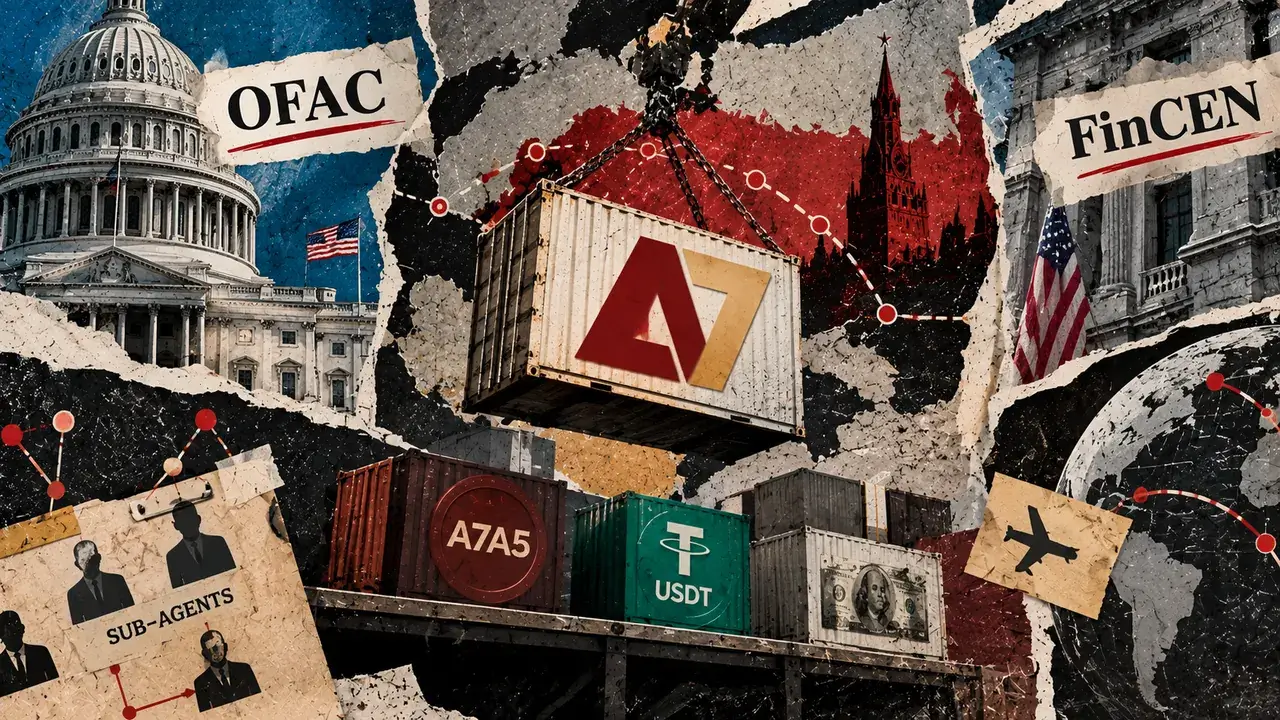
The Treasury Department designated the Russia-linked A7 Network a significant transnational criminal organization on Oct. 1. The designation extends blocking sanctions from companies previously targeted by Washington to the broader payment network. FinCEN simultaneously proposed barring covered financial institutions from sending or receiving funds involving identified A7 sub-agents. Treasury said A7's payment system has helped sanctioned Russian entities, Iran's central bank, the Islamic Revolutionary Guard Corps and other illicit actors move money. Treasury said companies in the system make restricted transactions resemble ordinary commercial payments. FinCEN said A7 sub-agents processed more than $17 billion in dollar-denominated transactions between January 2025 and June 2026. Treasury said the network claimed in January to be handling more than 2,000 transactions a day worth the equivalent of $91.5 billion, or about 13% of Russia's 2025 foreign trade. Where US sanctions jurisdiction applies, financial firms must freeze and report blocked persons' property and interests in property to the Office of Foreign Assets Control. The obligation includes entities owned 50% or more by sanctioned parties. FinCEN said A7 uses its ruble-backed A7A5 token for internal accounting and settlement. Ruble deposits at sanctioned Russian bank PSB back the token, according to FinCEN. FinCEN said the network frequently converts A7A5 into more widely accepted digital assets, including Tether's USDT, which can then be exchanged for fiat currency for international payments. FinCEN said A7 relies on sub-agents and intermediaries to supply liquidity and move funds while masking the network's involvement. FinCEN said trade documents and payment instructions can make sanctioned activity appear commercially legitimate. The proposed ban would include transfers to or from crypto addresses administered on behalf of identified sub-agents. Under the proposal, an institution receiving crypto from a listed sub-agent would block it where other sanctions rules require blocking. Otherwise, the institution would reject the transfer and deny the intended recipient access. FinCEN would provide the sub-agents' identities through its secure FI-Portal and require institutions to use risk-based procedures to detect prohibited transactions. The proposal is subject to public comment for 30 days after publication in the Federal Register. That timetable does not delay the sanctions already imposed. Crypto exchanges and financial firms with US exposure must assess whether counterparties, wallet addresses or payment routes involve A7 property. Once FinCEN circulates its sub-agent list, exchanges and over-the-counter desks will face decisions about screening counterparties that may be several steps removed from A7.
This content is an AI-generated summary/analysis for informational purposes only and does not constitute investment advice.