September 23, 20:50
BlackRock sees $5 trillion AI trade emerging for stablecoins
BlackRock sees a new $5 trillion AI trade emerging for stablecoins

CryptoSlate
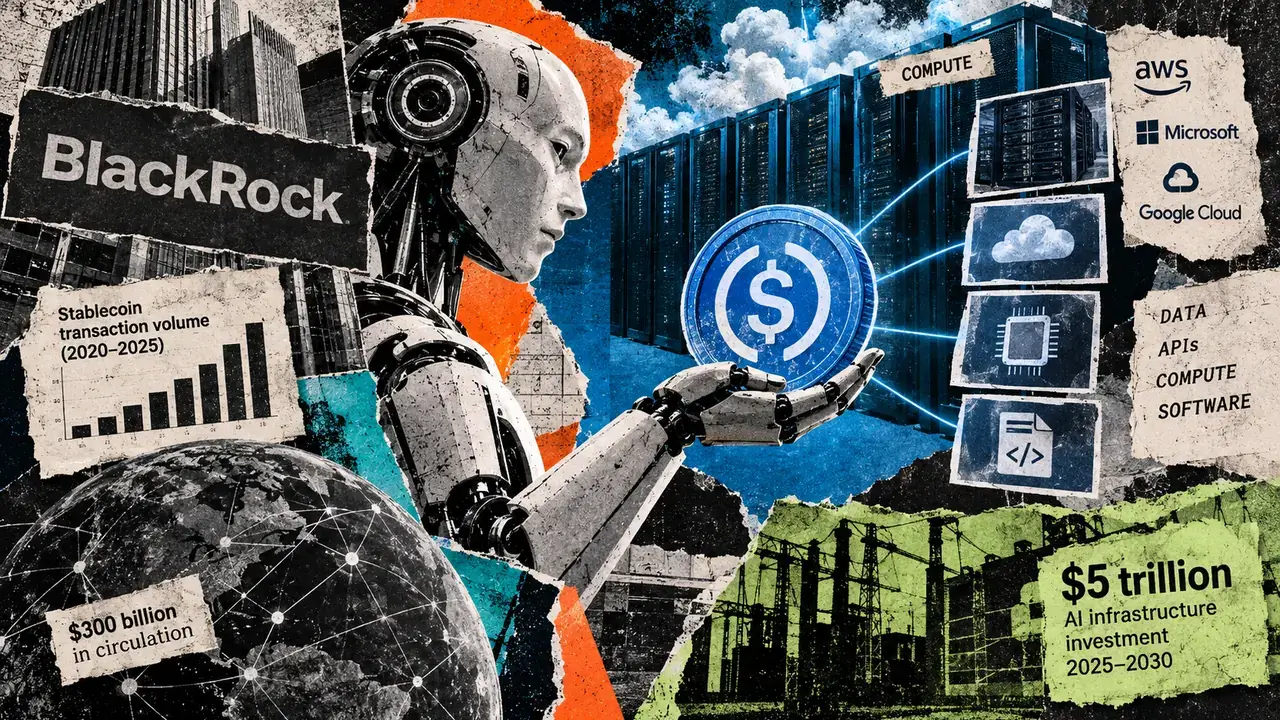
BlackRock sees autonomous AI systems creating a new use case for stablecoins as AI infrastructure investment could exceed $5 trillion between 2025 and 2030. BlackRock outlined the view in its report, The Machine-Native Economy. The report describes software making repeated payments for data, software, computing resources, and API calls without human approval. Stablecoins had more than $300 billion in circulation in 2025. They recorded about $11.2 trillion in adjusted transaction volume that year. BlackRock calculated that stablecoin volume grew at an 80% compound annual rate between 2020 and 2025. The US Automated Clearing House network grew at roughly 8.5% over the same period. The ACH network still processed about $93 trillion last year. BlackRock cautioned that stablecoin activity should not be directly compared with Visa and Mastercard because the networks measure transactions differently. AI agents could use programmable wallets to make payments that occur around the clock. Individual payments could cover API calls, data feeds, or units of computing power. Coinbase's x402 protocol lets services request payment before providing data or another resource. An agent can use the protocol to receive payment instructions and transfer USDC without a person completing checkout. Stripe and Tempo are developing the Machine Payments Protocol for stablecoin or traditional payment settlement. Stripe and OpenAI are developing a protocol that connects AI agents with existing merchant systems. Google and Visa are working on separate standards for agent identity and authorization. Traditional payment networks can adapt to autonomous software. Stablecoins may be better suited to payments that are especially small, frequent, or native to software. Higher stablecoin activity on Ethereum could increase demand for blockspace and validator services. ETH is used in Ethereum's fee and staking system. BlackRock said the value captured by native crypto assets will depend on fee structures, staking economics, and gas-sponsorship models. Applications can shield users and agents from holding the underlying gas token. Circle's Arc uses USDC as its native gas asset. Additional activity on Arc could strengthen USDC's role without creating the same mechanism for demand for a separate native token such as ETH. Bloomberg consensus forecasts cited by BlackRock put combined 2030 revenue from Amazon Web Services, Microsoft's Intelligent Cloud business, and Google Cloud at about $1.1 trillion. AI agents could compare computing providers and buy capacity for specific tasks. They could settle payments per job, per use, or potentially per model token. Standardized claims on computing capacity could eventually be traded or used as collateral. Futures markets could allow buyers and sellers to hedge changes in computing costs. Agentic payment activity remains nascent. Traditional financial companies are building autonomous commerce infrastructure alongside crypto firms. Stablecoin issuers are competing to make their tokens the default settlement asset for software. Ethereum and rival blockchains must show that higher stablecoin throughput creates demand for their own economic assets.
This content is an AI-generated summary/analysis for informational purposes only and does not constitute investment advice.