September 27, 20:05
Solana trade-ordering rule stalls as leaders retain inclusion choice
Solana's plan for fairer trades stalls as block producers still choose which orders get in

CryptoSlate
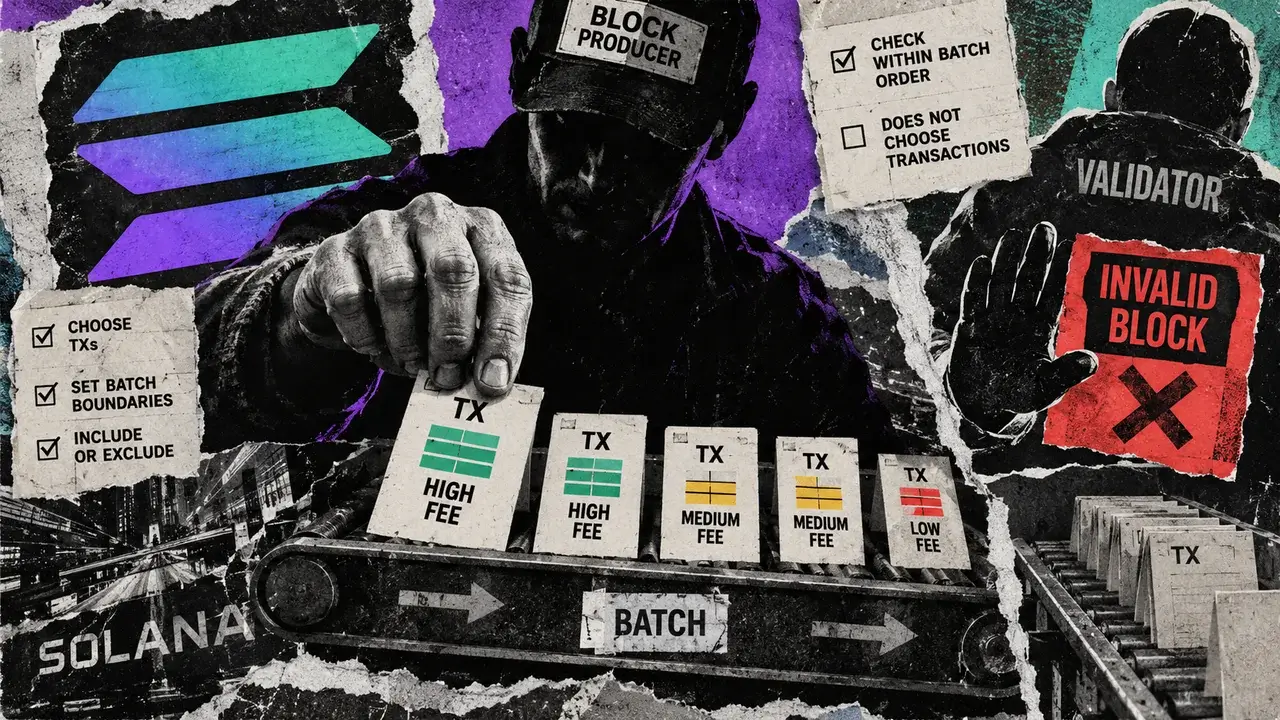
Solana's proposed SIMD-0649 rule closed on Sept. 25 without merging. The draft would let validators reject a block when non-exempt transactions in one batch appear outside non-increasing priority order. The rule would not decide which transactions leaders include. Leaders could defer transactions to later batches and choose batch boundaries. Equal-priority transactions could appear in either order. Simple vote transactions would be exempt. The priority score would divide the leader's reward for including a transaction by its requested cost under the pre-execution cost model. The draft specifies an integer calculation with a multiplier and a one-unit denominator guard. The reward would include the priority fee and the unburned portion of the base fee. Every batch except the final batch would have to span at least two FEC sets. Under the fixed-size rule, that would mean at least 64 data shreds. The final batch would face the ordering check but would not face the size minimum. A Sept. 23 review argued that leaders could close batches to separate conflicting transactions. The review requested current batch-size data by scheduler, client, and market conditions. It also requested a sensitivity test for different minimum sizes. The proposal and review do not provide measured data on how often current leaders produce smaller batches. An August discussion raised concern that waiting for a full batch could interfere with Firedancer's replay of partially received data. The revised draft would let validators compare and execute transactions as data arrives. Validators could later invalidate the block if a comparison fails. The draft acknowledges that reaching the two-FEC-set minimum could add broadcast delay at low throughput. SIMD-0649 would not stop a leader from favoring its own transactions by paying priority fees to itself. The public proposal would provide an audit of relative order within a batch, but it would not guarantee best execution or prevent preferential treatment, MEV, or slippage.
This content is an AI-generated summary/analysis for informational purposes only and does not constitute investment advice.